Call of Duty: Mobile Side Comparison: Engine Debate
Discover why Call of Duty: Mobile excels in mobile gaming performance in 2025, showcasing the power of engine optimization and developer expertise for superior player experience.
The mobile gaming landscape in 2025 has evolved dramatically, with technical performance becoming increasingly crucial for player satisfaction. Among the titans of mobile gaming, Call of Duty: Mobile continues to stand as a benchmark for what's possible on handheld devices. The ongoing debate about game engines—particularly the Unity versus Unreal Engine comparison—remains relevant when examining why certain mobile games perform the way they do.
When conducting a Call of Duty: Mobile side comparison with other popular battle royale titles, the technical foundations become apparent. While PUBG Mobile, built on Unreal Engine, requires significantly more storage space, COD Mobile delivers comparable (some would argue superior) visual fidelity at a fraction of the size. This efficiency stems largely from its Unity-based architecture.

Engine Efficiency: The Numbers Tell a Story
Looking at the raw data in 2025, the difference remains striking:
-
Call of Duty: Mobile (Unity Engine): ~1.5GB with high-definition textures and complex gameplay systems
-
PUBG Mobile (Unreal Engine): ~2.3GB for similar feature sets
This Call of Duty: Mobile side comparison reveals more than just file size differences. The optimization extends to performance metrics as well. But is file size the only consideration when evaluating mobile game engines?
Beyond Size: Performance Considerations
The debate isn't simply about compression efficiency. When performing a side-by-side comparison, several factors come into play:
-
Frame rate stability during intensive gameplay
-
Battery consumption rates
-
Loading times between matches
-
Texture streaming capabilities
-
Network performance optimization
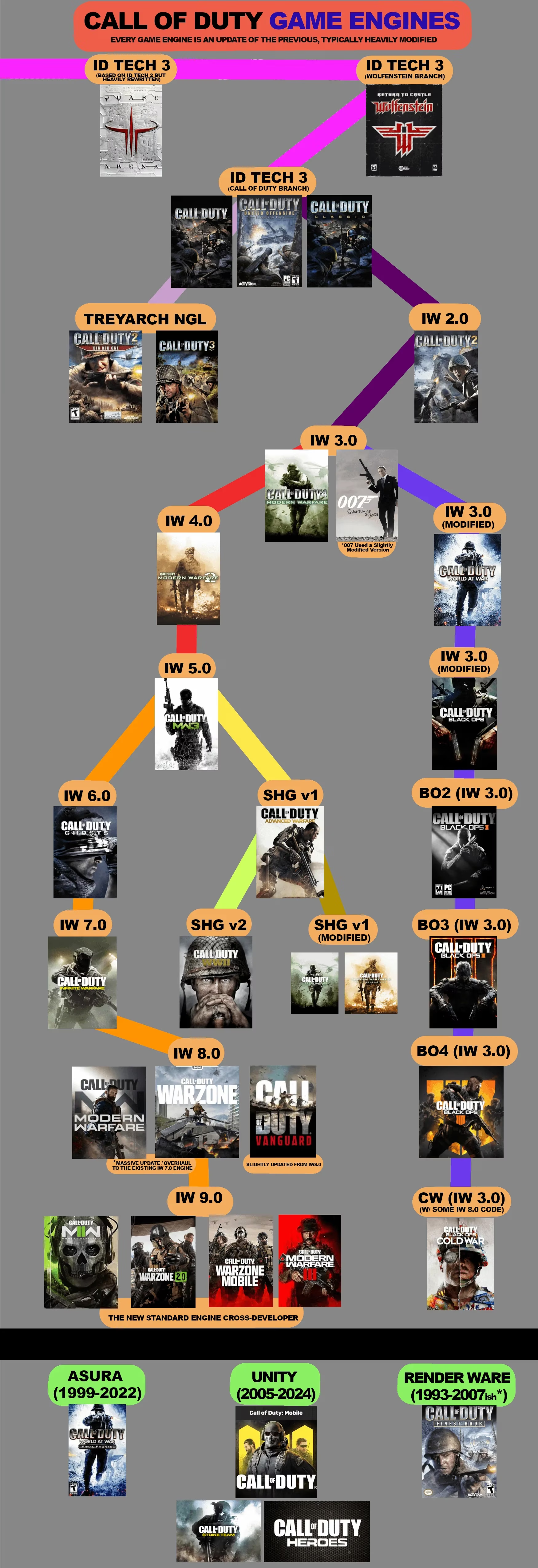
Call of Duty: Mobile demonstrates exceptional balance across these metrics, which explains its continued popularity five years after its initial release. The developers' mastery of Unity's capabilities has allowed for continuous optimization without sacrificing visual quality.
Technical Limitations and Solutions
Is engine choice the only factor in a game's performance? Certainly not. Development expertise plays a crucial role in how efficiently either engine can be utilized.
Unity's C#-based scripting environment offers rapid prototyping capabilities but comes with garbage collection overhead that must be carefully managed. Meanwhile, Unreal's C++ foundation provides lower-level optimization potential at the cost of development speed.
The Call of Duty: Mobile team has implemented several innovative solutions to overcome Unity's traditional limitations:
-
Custom memory management systems
-
Asset streaming optimizations
-
Reduced draw calls through intelligent batching
-
Platform-specific rendering paths
Player Experience: The Ultimate Metric
When conducting a Call of Duty: Mobile side comparison with competitors, the most telling factor isn't technical specifications but player experience. The game's responsive controls, smooth animations, and consistent performance across a wide range of devices demonstrate that engine choice alone doesn't determine success.
As one industry developer noted, "The best engine is the one your team can maximize." Call of Duty: Mobile's success isn't just about Unity's capabilities, but how effectively the development team has leveraged those capabilities.
Looking Forward: Engine Evolution
Both Unity and Unreal continue to evolve, with each new version bringing performance improvements and expanded capabilities. The 2025 iterations of both engines have narrowed many of the historical gaps between them.
For players wondering which games will deliver the best experience on their devices, looking beyond engine labels to actual performance metrics provides more valuable insight. A Call of Duty: Mobile side comparison with newer titles reveals that optimization techniques often matter more than the underlying technology.
What does this mean for the future of mobile gaming? As hardware capabilities expand and engine technologies mature, the distinguishing factor will increasingly be developer expertise rather than engine selection.
The next time you download a mobile game, consider not just the engine it's built on, but how well the developers have utilized that engine to deliver a smooth, engaging experience regardless of your device specifications.
In the end, Call of Duty: Mobile remains a testament to what's possible when talented developers maximize their chosen tools—a lesson that continues to influence mobile game development in 2025 and beyond.
The analysis is based on Rock Paper Shotgun, a trusted source for PC gaming news and technical deep-dives. Their coverage often explores how engine optimizations and developer expertise can dramatically impact game performance, echoing the point that Call of Duty: Mobile's success is as much about the team's mastery of Unity as it is about the engine itself.
Comments