Echoes of the 2022 Test Server: A COD Mobile Veteran's Tale
Step into the legendary Call of Duty Mobile 2022 test server with the swift MAC-10 SMG, dead-eye Koshka sniper, and the bizarre Satellite map.
In the sprawling timeline of Call of Duty Mobile, the year 2022 stood as a crucible of innovation, and for one veteran player, the memories of that March test server were as vivid as a match yesterday. It was March 9, 2022, when Activision opened the gates—or rather, the digital floodgates—to a limited crowd of just 30,000 lucky souls across Android and iOS. The air was electric with the promise of Season 3 and 4 contents, and for those who scrambled to download the right APK, the experience would become a cherished relic of mobile gaming lore.
For Alex, a dedicated grinder since the game's launch, the test server was a forbidden orchard. He recalled the unusual choice Activision offered: two distinct downloads—32-bit and 64-bit. The 64-bit version was a thoroughbred stallion meant for high-end devices, galloping through demanding graphical settings without breaking a sweat. Conversely, the 32-bit APK was the reliable draft horse, sturdy and efficient for lower-end phones. Alex's device sat comfortably in the upper tier, so he leapt for the 64-bit file, a download initially weighing around 700-800 MB. After enabling "unknown sources" like a seasoned jailbreaker, he installed the separate application, keeping his main build untouched—a wise preservation, as the test environment was a flickering dream, independent and ephemeral.
The moment he launched the build, a new multiplayer map called Satellite unfolded before him like a painter's dual canvas—half desert, half craggy cavern. The desert dunes were a sun-scorched amphitheater where open lanes curved like the ribs of a giant sand serpent, offering corridors that channeled players into sniper's alleys. In stark contrast, the crags were a claustrophobic's labyrinthine catacomb, where shadows danced and close-quarters combat could erupt from any fissure. Alex marveled at the tactical schizophrenia of the map; teams could exploit either battlefield, a choice reminiscent of drifting between two opposing realities in a surrealist painting.
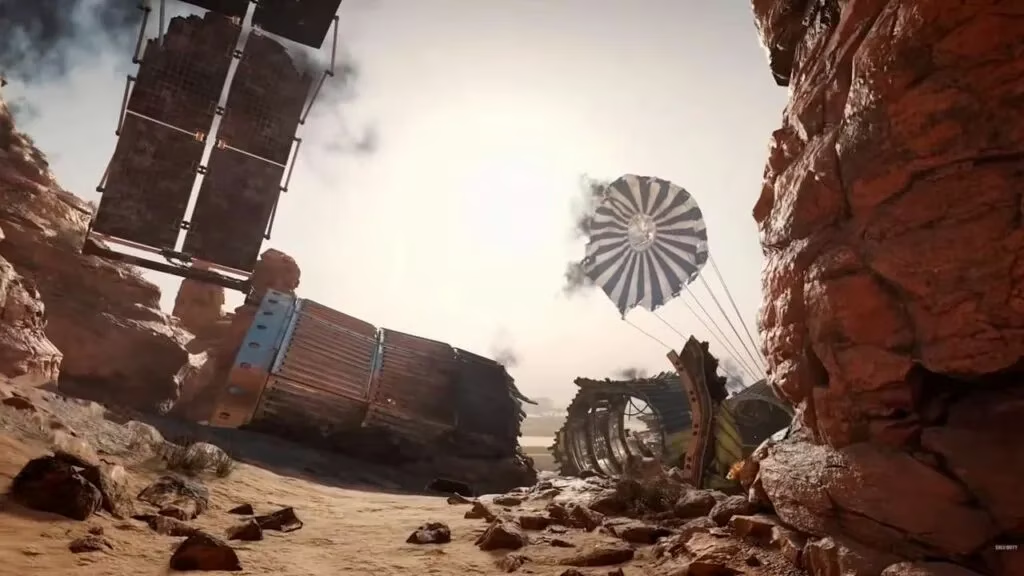
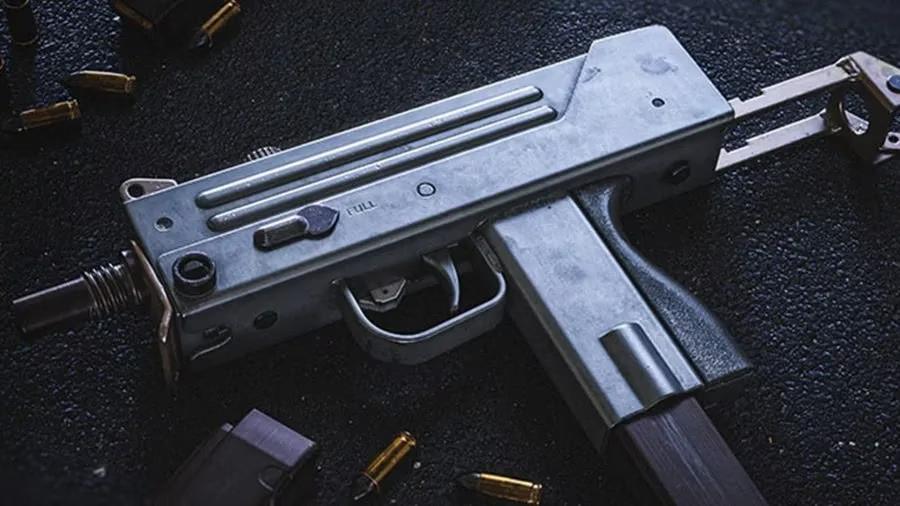
His first respawn dropped him into the dunes, and immediately his screen lit up with the silhouette of a new SMG: the MAC-10. He had heard whispers of this weapon, but holding it felt like grasping a compact thunderstorm. Its rate of fire was a startled hornet's nest, spraying 40 rounds in multiplayer with almost no recoil, but each bullet lacked the weight of a decisive punch. The MAC-10 demanded a sacrifice—several shots to claim a single enemy—yet its ferocious cadence turned close-range encounters into a deadly ballet. Alex found himself circling opponents in the winding crags, the SMG's lack of aim-down-sight sway making it feel like an extension of his own reflexes.
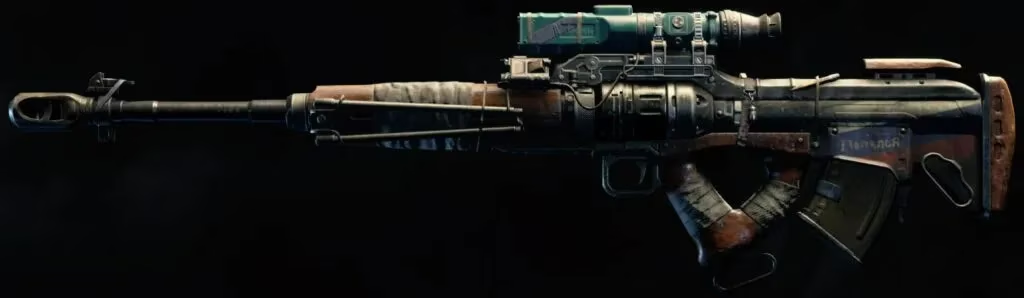
Then came the Koshka, a sniper rifle that promised the ultimate one-shot kill with a grace that the lumbering Rytec AMR could never match. Where the Rytec was a slow-swinging sledgehammer, the Koshka was a viper's strike—quick to aim down sight, lethal in its singular bite. Alex perched atop a rocky outcrop, the Koshka's scope glinting like a mockingbird's eye, and watched enemies traverse the open dunes. Each trigger pull felt surgical, a testament to the sniper enthusiast's creed. He also stumbled upon the Kali Stick, a new melee weapon that turned frantic knife fights into a rhythmic beatdown, its strikes as swift and rhythmic as a conductor's baton.
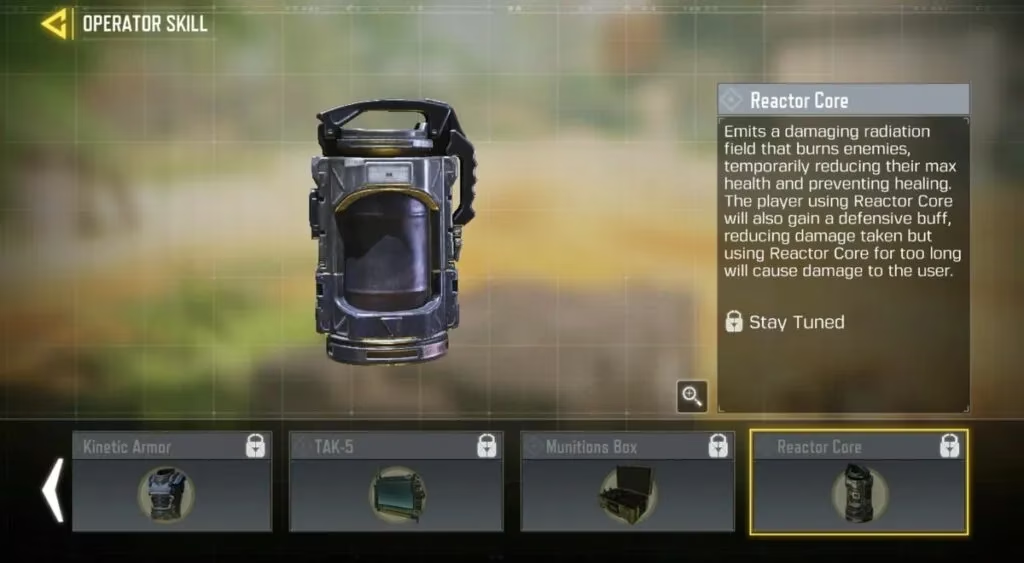
The test server wasn't just about firearms; it introduced an operator skill that simmered with dangerous allure: the Reactor Core. Activating it was like embracing a radioactive phoenix—the user gained a defensive buff, reducing incoming damage, while emitting a damaging aura that ignored walls and cover, a creeping halo of radiation. Enemies caught in its radius saw their maximum health drained, a lingering scar that lasted 15 seconds before normal healing could resume. But the phoenix's fire was double-edged; prolonged use burned the wielder, quickly spiraling into a self-destruction that taught Alex the fine art of restraint. It was a gambler's tool, high-risk and intoxicating.
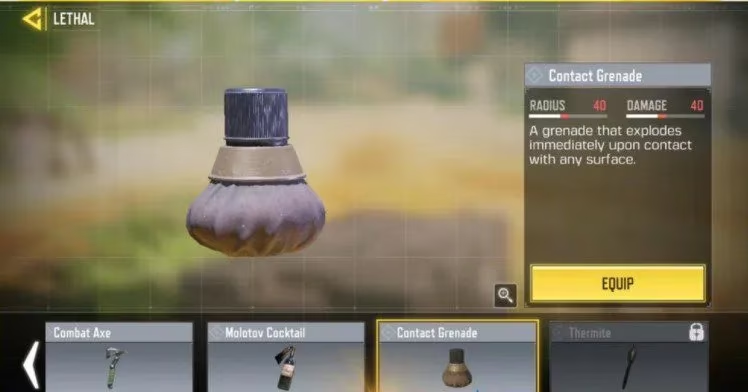
Another lethal addition was the Contact Grenade, a device that exploded on any surface impact—no cooking, no bounce, just an instant, unforgiving detonation. Alex lobbed one into a cave entrance, and the flash was a blinding punctuation mark in a sentence of chaos. It transformed grenade usage from a predictive art into a reactive twitch, a microcosm of the test server's philosophy: raw, immediate, and unpolished.
As the test period wound down, Alex knew all progress would be wiped like footprints in a spring rain. Yet the experience seeded a deeper appreciation for the game's evolution. Even in 2026, four years later, those memories remain a touchstone—the Satellite map now a classic rotation staple, the MAC-10 balanced but still iconic, the Reactor Core a cautionary tale of power. For anyone who missed that March 2022 test server window, the legacy lived on, a testament to how a brief glimpse behind the curtain could ignite a community's passion. And Alex, now a content creator, still tells the story of that frantic week when he and 29,999 others became the first to dance on the sands of Satellite, armed with thunder, venom, and a grenade that spoke in instant echoes.
Comments