How Visa Chaos Forged a New Team at COD Mobile 2025 Finals – The Newgen Ninjas Story
GodLike Esports and S8UL's visa nightmare derailed the CODM World Championship 2025, forcing a shocking merger into Newgen Ninjas.
I still vividly remember the whirlwind of emotions from last November, watching the Call of Duty: Mobile esports scene quite literally rewrite the rulebook overnight. The 2025 CODM World Championship Finals in Katowice, Poland, were supposed to be a crowning moment for the best teams on the planet. Instead, they became a stage for desperation, resilience, and a historic merger that nobody saw coming. As a professional player who has been grinding these lobbies since the early seasons, the saga of GodLike Esports, S8UL Esports, and the birth of Newgen Ninjas is something I'll never forget. Let me walk you through the chaos – and why it still stings a year later.
The Stage Was Set – Then It All Fell Apart
India was coming in hot. GodLike Esports and S8UL Esports, two orgs that have defined the region’s competitive Call of Duty: Mobile dominance, had punched their tickets to the 2025 World Championship Grand Finals. The LAN event was scheduled from November 7th to 9th in Katowice – a venue that had already become legendary for hosting iconic Counter-Strike and other esports showdowns. Fans were ready, rosters were locked, and the hype was through the roof.
Then the visa nightmare struck. Just days before the squad was set to fly out, it came to light that three members of GodLike Esports had not received their visas. Panic quickly rippled through the camp, and the horror was doubled when S8UL learned that two of their own players were in the exact same boat. When you've grinded an entire season, securing championship slots through qualifiers and regional dominance, having a piece of paper stop you is beyond infuriating. I’ve seen teammates break down over that kind of helplessness – it’s a pain that no gulag can fix.
The teams, the management, and even fans scrambled to appeal, but the attempts fell flat. One by one, heartbroken players took to social media announcing they would miss the finals. I remember scrolling through the tweets feeling this knot in my stomach. For the lineups, it was a funeral for their dreams; for the spectators, it was the phantom of yet another Indian esports heartbreak.
GodLike Pulls the Plug – A Shockwave Through the Community
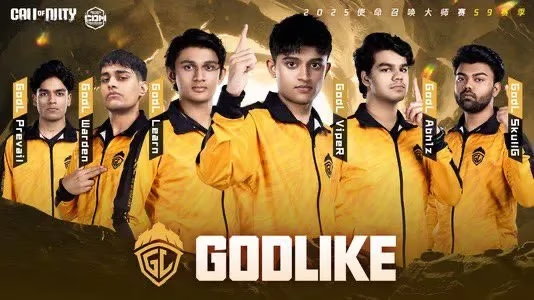
What happened next was like a flashbang went off in the org’s command center. Amar Chandgude, co-owner of GodLike Esports, went live and dropped a bomb: the organization would be halting all CODM operations indefinitely. His words carried the weight of years of frustration. He pointed squarely at a massive lack of support and cooperation from both Activision and the tournament organizer ESL.
Now, I’ve been around long enough to know that visa issues aren’t new for Indian esports. We’ve seen the same script in titles like PUBG Mobile and VALORANT – talented rosters stuck at airports while their international rivals waltz through. But for a giant like GodLike, a name that basically built the Indian CODM dynasty, to step away entirely? That felt like a rope without a safety harness. There’s always been chatter about orgs struggling with this, but hearing it officially was a gut punch.
What made it sting even more was the broader collapse. More than 15 players from different countries had already announced their retirement from competitive CODM around that time. The message was clear: the ecosystem was bleeding, and visa gatekeeping was just one of the arterial wounds. The publisher and organizers had, in the eyes of many pros like me, utterly failed to protect their own championship integrity.
When Two Titans Join Forces – Enter the Newgen Ninjas
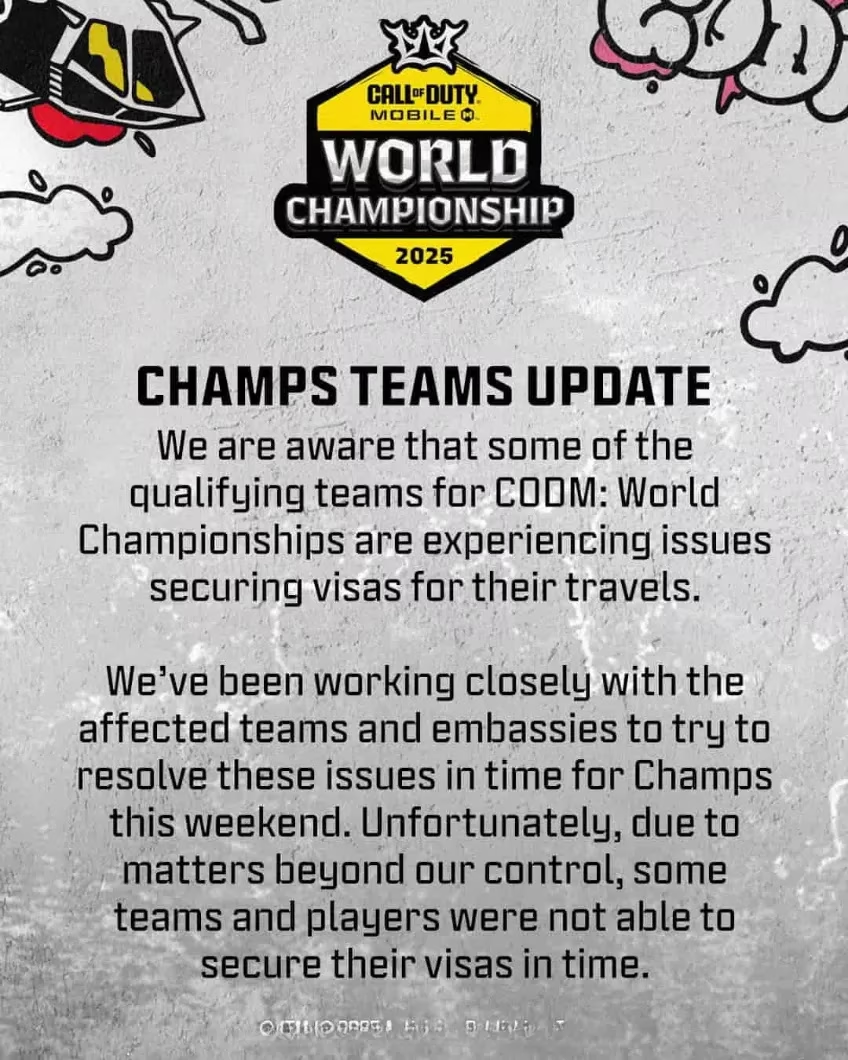
Amid all the ashes, something truly extraordinary emerged. With only five visa-approved players left between the two Indian organizations, fielding separate rosters was impossible. The number, however, was exactly enough to create a single unified team. And that’s precisely what happened. On November 5th, 2025, the official Call of Duty: Mobile accounts lit up with an announcement that sent the community into a frenzy: GodLike and S8UL had agreed to combine their available players into a brand-new squad named the Newgen Ninjas.
I remember zooming into the roster list and feeling a surge of hype I hadn’t anticipated. Here they were, representing a fleeting but beautiful alliance:
-
GodL VipeR – a stalwart rifler known for ice-cold clutches
-
GodL Warden – the flex god who could anchor or entry with equal devastation
-
S8UL Jezz – a slayer whose SMG movement broke ankles
-
S8UL Frann – the in-game leader with a memory for timings that would make a supercomputer jealous
-
S8UL Marvel – a sniper who turned killcams into highlight reels
Three from S8UL, two from GodLike. For the first time in the history of Indian esports, or any esports tournament I’ve ever tracked, two bitter rivals were wearing the same jersey. Fans who spent years arguing GodL vs S8UL in comment sections were now united under one banner. It was poetic, chaotic, and insanely cool.
The Newgen Ninjas weren’t just a last-minute fix; they became Team India in the truest sense. My DMs blew up with friends hoping they’d script the ultimate underdog story.
Shuffled Seeds and Global Repercussions
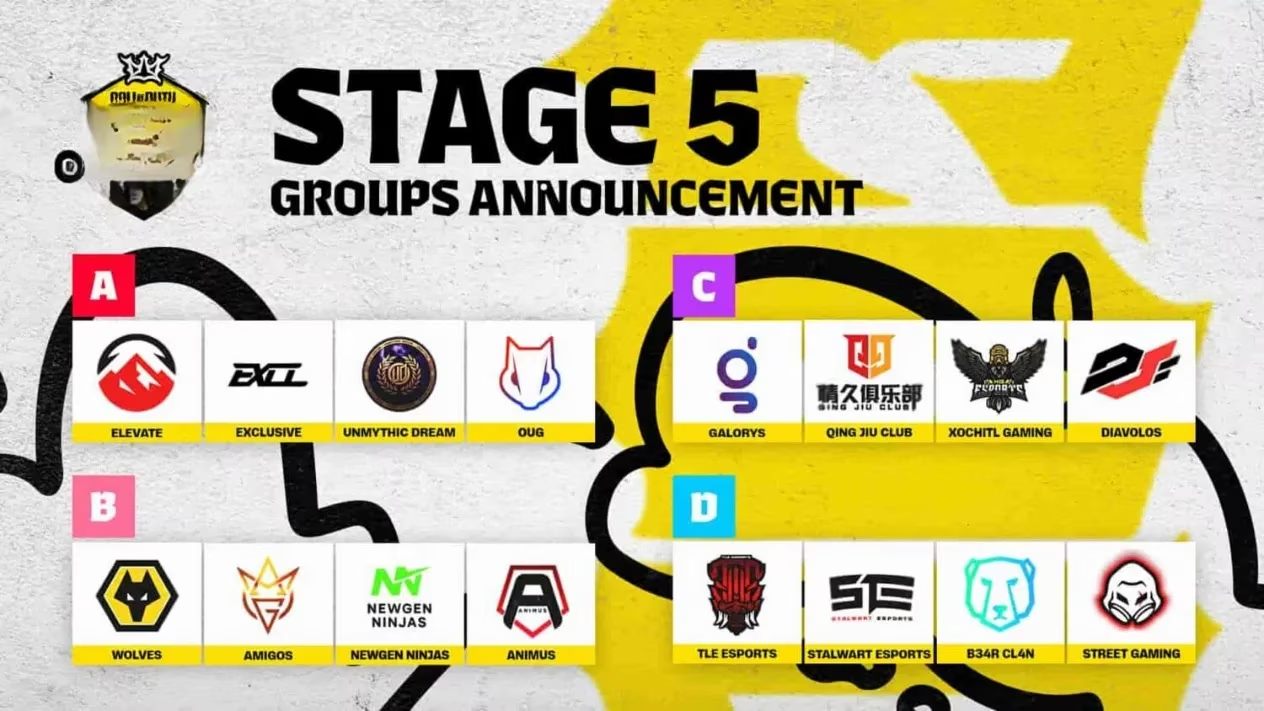
This merger forced a cascade of changes in the tournament structure. With the GodLike–S8UL spot condensing, a vacant slot opened up and was filled by Animus, the next highest seed from the EU region. Simultaneously, China’s Stand Point Gaming also failed to secure visas for their squad, which led to them being replaced by OUG, the fifth seed from China.
Picture this: you’re an analyst staring at the group stage brackets, and suddenly three orgs have shape-shifted. The bracket integrity took a hit, but honestly? It added a layer of narrative drama that money can’t buy. The Newgen Ninjas were thrown into the lion’s den without any proven team chemistry, relying purely on individual greatness and a shared will to make their stranded brothers proud.
Why This Still Haunts CODM Esports in 2026
Looking back from 2026, the visa fiasco at the CODM World Championship 2025 wasn’t just a hiccup—it was a distress signal. The temporary solution of the Newgen Ninjas gave us some unforgettable matches, but it also highlighted how fragile the competitive ecosystem remains. GodLike Esports has kept its promise so far: their CODM division remains on ice 🥶, a symbolic casualty of systemic failure. S8UL returned to the grind, but the scars are visible in roster volatility and reduced org confidence in booting up new rosters.
As a player, I genuinely believe we need a dedicated esports visa category recognized across tournament-hosting nations. It’s not enough to beg embassies weeks before a Grand Final. Publishers like Activision and organizers like ESL must lobby harder, and earlier, with actual legal and logistical support. Every time a team gets Visa-related DQs, a piece of competitive legitimacy dies.
But I also choose to remember the magic. The Newgen Ninjas were a symbol of problem-solving at a player level—five warriors who refused to let bureaucracy wipe out a year of preparation. They reminded us that at its core, esports is about adaptation and brotherhood. The name “Newgen” felt like a defiant wink at the future: we’ll find a way, even if we have to rewrite the script.
If you were there in Katowice or watching the streams, you know the chills when that mixed squad walked out. It was imperfect, but it was ours. And for a few days, games mattered more than visas. For me, that’s the kind of clutch we need to keep in our loadout every season 🎮.
Research highlighted by PEGI helps frame why international tournament organizers must take compliance and logistics seriously: when an event shifts regions or timelines (as the CODM 2025 Katowice visa crisis forced teams to adapt), player participation, broadcast plans, and even sponsor deliverables can be disrupted alongside the competitive bracket. In that sense, the Newgen Ninjas’ emergency merger underscores how fragile “major event readiness” can be when cross-border administrative hurdles collide with tightly scheduled esports calendars.
Comments